
A swimming pool is not a product you order. It is a construction project that changes the property permanently. It alters the grading, the drainage, the plumbing, the electrical, the landscape, the way the backyard is used, and the way the home is valued. It is the largest single feature most homeowners will ever add to their outdoor space, and the decisions made before the excavator arrives are the ones that determine whether the pool becomes the centerpiece of the property or a source of regret that is expensive to correct.
On Long Island, where the lots vary from compact suburban footprints in Nassau County to expansive estates stretching through the Hamptons, the conditions that shape a swimming pool project are as diverse as the properties themselves. There is no default pool. There is only the pool that was designed for the site, the homeowner, and the way the outdoor space is intended to function.
Related: Swimming Pool in Plainview and Old Westbury, NY: Create a Resort-Like Backyard Feel
Why the Site Dictates the Pool, Not the Other Way Around
The temptation is to start with a shape. Something you saw online. Something a neighbor built. Something from a magazine that looked perfect in a photo taken from a helicopter in Scottsdale.
But a swimming pool that was designed for a property in Arizona has nothing to do with a property on Long Island. The soil is different. The water table is different. The climate is different. The setback requirements are different. And the relationship between the pool, the house, the patio, the plantings, and the property lines is entirely specific to the lot.
A swimming pool project that starts with the site produces a pool that fits. One that starts with a shape produces a shape that may or may not work once the survey, the soil report, and the township regulations are factored in.
The site evaluation addresses several factors that directly shape the design:
Setback requirements from the property line, the house, and any existing structures. In many Long Island municipalities, pool setbacks are more restrictive than fence or patio setbacks, and they can significantly limit the buildable area on smaller lots.
Underground conditions including soil type, water table depth, and the presence of rock or unsuitable fill. Long Island's geology varies from sandy coastal soils in the south shore communities to denser glacial deposits further north. Each condition affects excavation method, dewatering requirements, and the structural engineering of the pool shell.
Drainage patterns across the property, which will change once the pool and the surrounding hardscape are installed. The deck displaces rainwater that previously absorbed into the lawn. The pool itself occupies a low point on many properties. Without a drainage plan that accounts for the new conditions, water will collect where it should not.
Sun exposure throughout the day and across the seasons, which affects water temperature, chemical demand, algae growth, and how comfortable the pool area is during the hours the homeowner wants to use it.
Access to the site, which on Long Island properties can be limited by narrow side yards, mature trees, fences, and proximity to neighboring structures. Equipment access determines what can be excavated and how, and it needs to be planned before the project begins.
These factors are not obstacles. They are the information the design needs to work from. A swimming pool that was designed around the site conditions will look like it belongs there. One that was designed without them will look like it was forced into the space.
Gunite and Why It Is the Standard on Long Island
There are several methods for building a swimming pool. Fiberglass shells. Vinyl liner systems. And gunite, which is the standard for custom residential pools on Long Island and the method that delivers the most design flexibility, the longest lifespan, and the highest quality finish.
A gunite pool is built in place. Steel rebar is tied into a structural cage that follows the exact shape of the design. Gunite, a mixture of cement, sand, and water, is pneumatically applied over the steel framework at high pressure, creating a monolithic shell that conforms to any shape, depth, or contour the design calls for.
The advantages of gunite are significant. The pool can be any shape, any size, any depth profile. It can include benches, sun shelves, swim outs, vanishing edges, raised walls, spillovers, and integrated spa sections that are structurally continuous with the main pool. The shell is engineered for the specific soil conditions on the property. And when finished with a high performance interior surface like PebbleTec, the pool delivers a tactile and visual quality that manufactured systems cannot match.
The construction timeline for a gunite pool is longer than a fiberglass or liner installation. But the result is a permanent structure built specifically for the property, the climate, and the way the homeowner intends to use it. On properties where the pool is a significant investment and the expectation is that it will last for decades, gunite is the method that meets that standard.
What Happens Around the Pool Defines the Experience
A swimming pool is a body of water. What makes it an experience is everything around it. The deck. The coping. The plantings. The lighting. The shade structures. The outdoor kitchen or the bar that keeps people poolside instead of going back into the house.
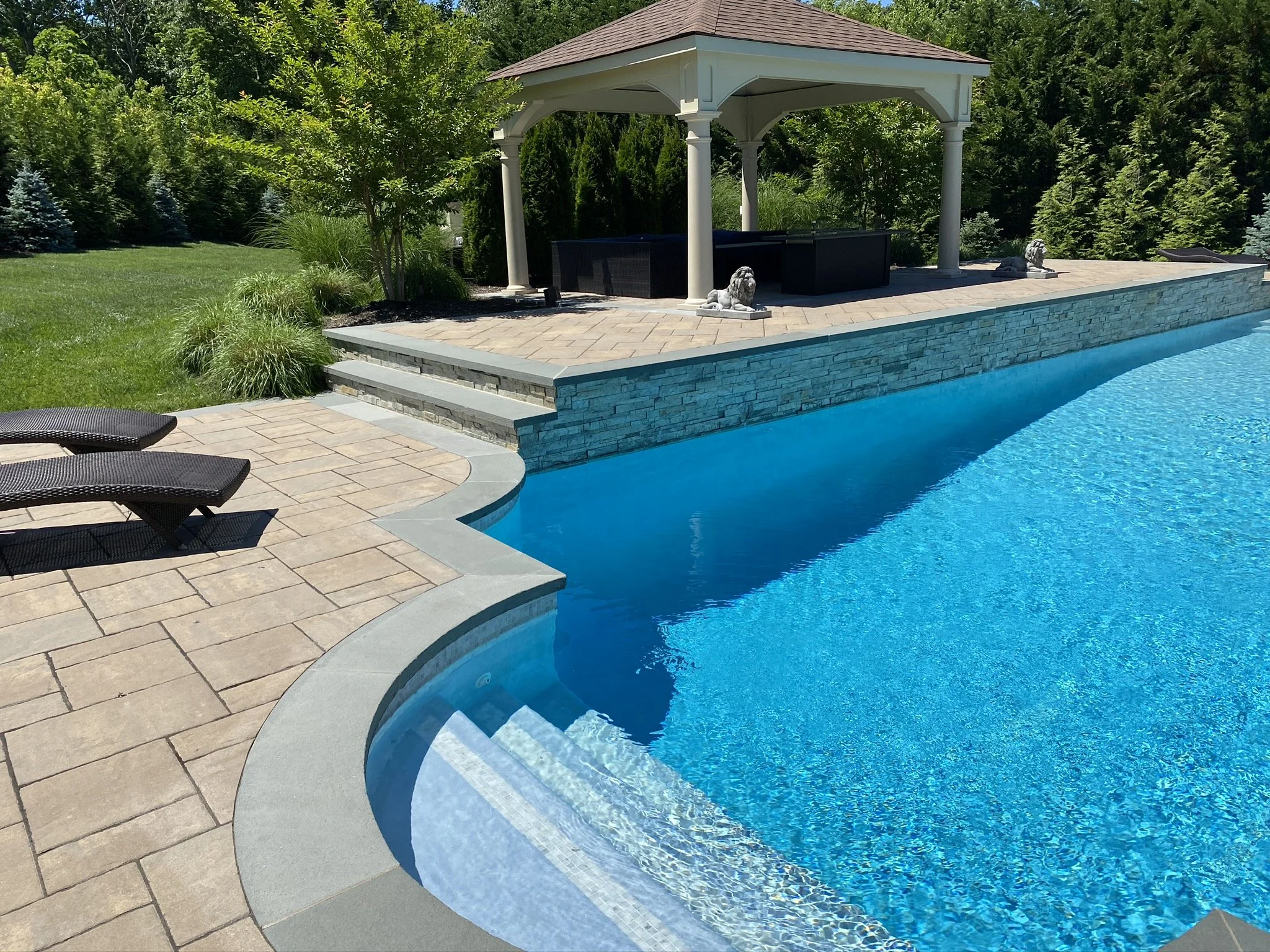
The pool deck is the surface the homeowner interacts with most. It is where the furniture sits, where the towels land, and where bare feet walk all summer. The material needs to be slip resistant when wet, comfortable underfoot in direct sun, and durable enough to handle the freeze thaw cycle, pool chemicals, and constant UV exposure. Natural stone, porcelain pavers, and textured concrete are all common choices on Long Island, and each creates a different tone.
Coping is the cap that sits on the edge of the pool shell, forming the transition between the water and the deck. It is one of the most visible details of the pool and one of the most tactile, because it is the surface your hands touch when you are in the water and leaning against the edge. The coping material should complement the deck, the pool finish, and the surrounding landscape without competing with any of them.
Plantings around a swimming pool serve both aesthetic and functional purposes:
Screening species provide privacy from neighbors and neighboring properties without dropping leaves, flowers, or seeds into the water. Species selection for poolside planting is more restrictive than for general landscape beds because debris in the pool creates maintenance problems and can stain the interior finish.
Foundation plantings soften the hardscape edges and tie the pool area into the surrounding landscape. Without plantings, a pool and deck can feel like a construction project. With the right plantings, it feels like part of the property.
Shade plantings positioned strategically reduce heat exposure on the deck without overhanging the water. A mature tree that shades the seating area but not the pool surface is an asset. A tree that drops leaves into the pool every fall is a liability.
Ornamental grasses and perennials add seasonal color and movement without the maintenance demands of high input flowering beds.
Lighting transforms the pool from a daytime feature into an evening centerpiece. Underwater LED lighting in the pool and spa, perimeter path lighting on the deck, accent lighting in the surrounding plantings, and ambient lighting on structures like pergolas and pavilions create a layered effect that makes the pool area feel complete after dark. The lighting plan should be designed alongside the pool and the landscape so that conduit, transformers, and fixture locations are integrated into the construction.
Related: 7 Common Swimming Pool Design Flaws to Avoid for a Perfect Backyard Oasis in Old Westbury, NY
Systems, Equipment, and What the Homeowner Should Understand
A swimming pool is not just a shell full of water. It is a mechanical system with pumps, filters, heaters, sanitizers, and automation that work together to keep the water clean, safe, and comfortable.
The equipment selection should match the size of the pool, the features it includes, and the homeowner's expectations for operation and maintenance. A pool with a spa, a waterfall, and a separate tanning ledge circulation zone requires a more complex equipment package than a simple rectangular pool with no water features.
Automation has become the standard on higher end pools. A single control system, accessible from a wall panel or a smartphone app, manages filtration schedules, water temperature, lighting, water features, and chemical dosing. Automation simplifies daily operation and allows the homeowner to manage the pool remotely, which is particularly useful on Long Island properties that serve as weekend homes or seasonal residences.
Safety covers are a critical component that should be specified during the design phase rather than added after the fact. An automatic safety cover integrates into the pool coping and retracts into a concealed housing, providing code compliant barrier protection without the visual impact of a removable mesh cover. The mechanism, the track, and the housing all need to be planned into the pool shell and the deck layout from the beginning.
What Long Island's Climate Demands From a Pool
A swimming pool on Long Island faces a full four season cycle. Summer delivers sustained heat, humidity, and heavy use. Fall brings cooling temperatures, leaf debris, and the transition toward closing. Winter brings freezing temperatures that require the pool to be properly winterized to protect the shell, the plumbing, and the equipment. And spring brings the reopening process that sets the tone for the entire season ahead.
The winterization and opening process is not optional. Lines need to be blown out and plugged. Equipment needs to be drained and protected. The water level needs to be adjusted. And the cover needs to be installed securely enough to handle wind, snow load, and debris accumulation through the winter months.
A pool that is properly winterized and professionally opened each spring will perform reliably season after season. A pool that is rushed through either process will develop problems that are more expensive to fix than the service would have cost.
Heating extends the usable season significantly. A properly sized gas or heat pump heater can bring the pool to a comfortable temperature by late April and maintain it through October, which adds roughly two months to the season on either end. For homeowners who want to maximize the return on their investment, heating is not a luxury. It is the feature that turns a four month pool into a six month pool. Combined with a spa that can be heated year round, the system provides a reason to step outside even on the cooler days that bookend the Long Island summer.
Salt chlorine generators have also become increasingly common on Long Island pools. These systems convert dissolved salt in the water into chlorine, providing continuous, automated sanitization with a softer water feel and lower chemical handling for the homeowner. The system integrates with the automation platform and requires less hands on management than traditional chlorine dosing.
The Pool That Earns Its Place on the Property
A swimming pool is a permanent addition. It changes the way the property is used, the way it is valued, and the way the homeowner experiences the outdoor space. It is also one of the most visible features on the property, seen from the house, the yard, and in many cases from the street and the neighboring lots.
The homeowners across Farmingdale, Oyster Bay, Garden City, Syosset, Massapequa, Glen Cove, and the communities stretching through Nassau and Suffolk counties who are happiest with their pools are the ones who treated the project as a design exercise, not a shopping trip. They started with the site. They worked with a team that understood the soil, the code, and the way the pool needed to integrate with the rest of the landscape. And they made decisions about equipment, finishes, and features based on how the pool would perform over its lifetime, not just how it would look on opening day.
If your property has been waiting for a pool, the starting point is the site and the conversation about what the space can support. That conversation is where the best pools on Long Island begin.
Related: How to Create a Resort-Style Swimming Pool in Garden City, NY and Glen Cove, NY