

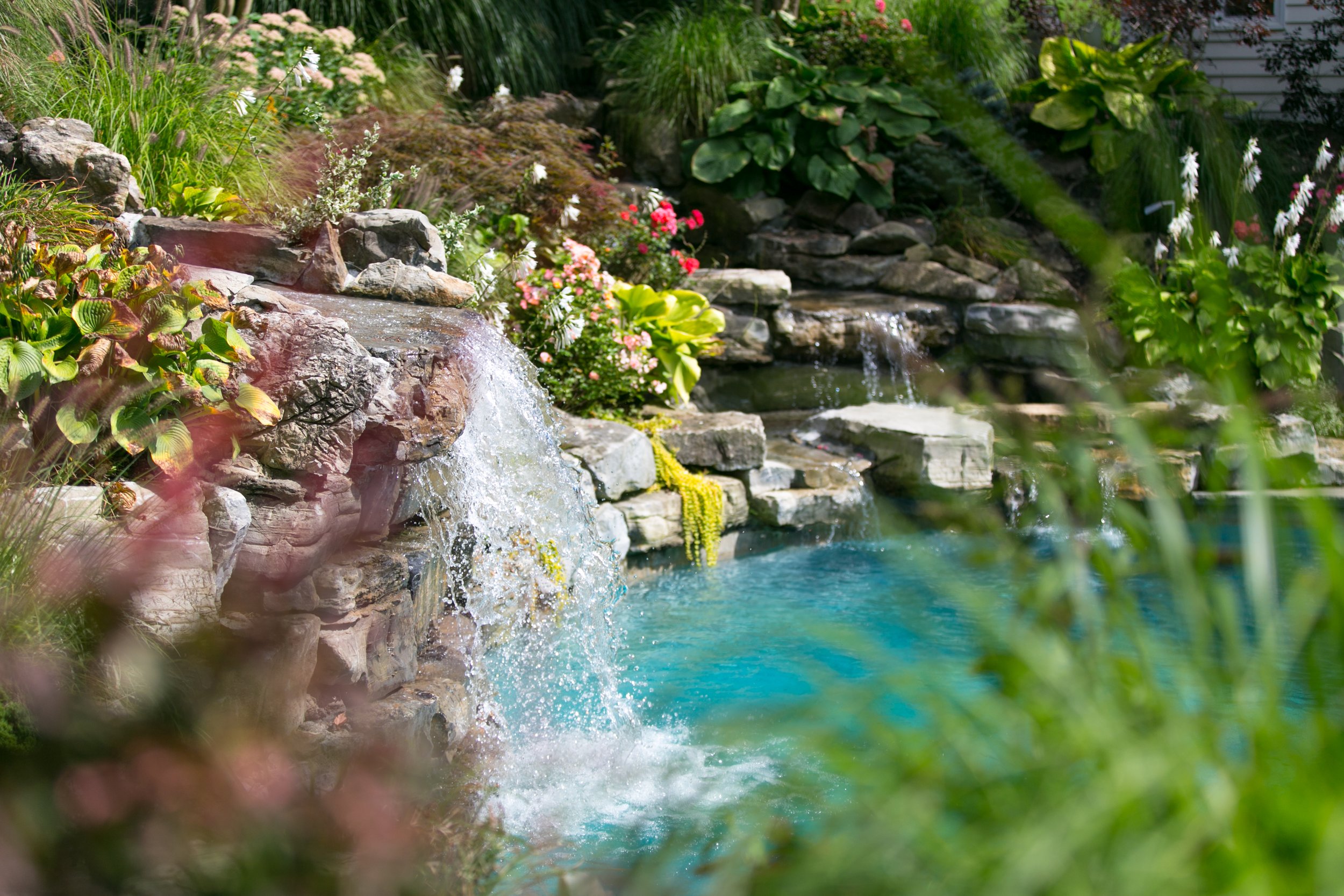
You've probably pictured it already: water sheeting quietly over stone into your pool, turning a swim into something closer to a retreat. That's what a well-designed waterfall adds to a backyard pool, and it's also why pool waterfall installation in Farmingdale, NY, gets planned wrong more often than any other pool add-on. The Platinum Group designs and builds custom gunite pools and water features across Long Island, and the waterfalls that still look and sound right five years in are engineered around your specific pool, not bolted on as an afterthought.
What Does Pool Waterfall Installation Actually Involve?
A pool waterfall starts with structural work, whether that's a raised rock formation, a sheer descent wall, or a stacked-stone feature built into a retaining structure at the pool's edge. Each of these needs its own footing or bond beam tied into the pool's structural shell, since a waterfall added after the fact without that connection tends to shift or crack independently of the pool itself.
Plumbing gets roughed in before any stone goes up
Waterfall plumbing, the lines that carry water up to the feature and let it fall back into the pool, needs to run during the same excavation phase as the rest of the pool's plumbing. Retrofitting this into a finished pool means cutting into existing gunite, which costs far more than building it in from the start.
Stone or masonry work finishes the structure
Once plumbing and structural elements are in place, the visible stone or masonry work goes on last. This is also where a contractor dials in the water's flow rate and sound, since the same structure sounds like a gentle trickle or a rushing stream depending on how the water is directed over the final surface.
Where Should A Waterfall Go Relative To Your Pool?
Placement affects sound, sightlines, and how much the feature interferes with swimming and pool maintenance. A waterfall positioned in a corner or along a raised section of the pool's perimeter tends to work better than one in the middle of open swimming space, since it doesn't create a swimming hazard or block sightlines across the pool.
Sound travels differently depending on placement
A waterfall near a patio or seating area amplifies the sound of falling water for anyone sitting nearby, while one on the far side of the pool creates more of a background ambiance. Deciding which effect you want shapes where the feature belongs before construction starts.
Sun and shade change how a waterfall reads visually
Stone catches light differently depending on the time of day, and a waterfall positioned to catch late-afternoon sun often becomes a visual focal point in a way one tucked in permanent shade doesn't. Walking the property at different times of day confirms the best spot before committing to a design.
What Materials Hold Up Best For A Long Island Waterfall?
Natural stone, whether that's fieldstone, boulders, or cut veneer, is the most common material for pool waterfalls in this region, largely because it holds up to constant water exposure and freeze-thaw cycling through Long Island winters without the maintenance concerns of some manufactured alternatives. Stacked fieldstone gives a natural, organic look, while cut stone veneer over a structural wall creates a cleaner, more architectural feature.
Freeze-thaw resistance matters even with a pool that's closed in winter
Even though the pool itself gets closed for the season, exposed stone and structural elements still face New York's full winter weather. Choosing stone rated for freeze-thaw durability, and confirming proper drainage behind any veneer, prevents cracking that shows up as damage the following spring.
Finish and texture affect both look and safety
A honed or polished stone finish looks striking but gets slippery when wet, which matters on any surface near the pool deck that people walk across barefoot. A more textured, natural finish balances aesthetics with safer footing around the water feature.
What Equipment Does A Pool Waterfall Need To Run Properly?
A dedicated pump, sized specifically for the waterfall's flow rate and the height water needs to travel, keeps the feature running efficiently without overtaxing the main pool circulation system. Running a waterfall off the primary pool pump instead of a dedicated unit is a common shortcut that reduces flow control and adds strain to equipment sized for filtration, not water features.
Lighting extends the feature into the evening
Underwater or accent lighting built into the waterfall structure turns a daytime feature into something that reads just as well after dark. Planning lighting conduit during construction, rather than after, keeps wiring hidden inside the stone structure instead of surface-mounted later.
Automation makes daily operation simpler
Many homeowners pair a waterfall with a pool automation system that lets you turn the feature on and off, or adjust flow rate, from a phone app rather than a physical valve at the equipment pad. Deciding on this level of control during the planning phase avoids retrofitting automation hardware into a finished system.
How Much Does A Pool Waterfall Add To A Pool Project?
Cost depends on the waterfall's size and material, whether it's built as part of new pool construction or added to an existing pool, and how much structural and plumbing work the specific design requires. Adding a waterfall during original pool construction costs meaningfully less than retrofitting one later, since the structural and plumbing work happens during the same excavation rather than as a separate project requiring new access to the pool shell.
Retrofits require more invasive work
Adding a waterfall to an existing pool means cutting into finished gunite or vinyl liner, running new plumbing through material that's already cured, and matching new stonework to existing pool decking. This is workable, but it costs more and takes more careful planning than building the feature in from day one.
Site visits produce more accurate numbers than general estimates
National average pricing for pool waterfalls varies widely and doesn't account for your specific pool's construction, your property's layout, or the exact stone and equipment package you want. A quote based on an actual site visit and pool design is the only number worth budgeting around.
How Long Does A Pool Waterfall Project Take?
A waterfall built as part of new pool construction adds relatively little to the overall timeline, since the structural and plumbing work happens alongside the rest of the excavation and gunite shell. A waterfall retrofitted onto an existing pool typically takes one to three weeks depending on size and complexity, plus time for any new masonry to cure properly before the pool refills.
New construction integrates the timeline naturally
Building a waterfall into a new pool means the feature's footings, plumbing, and structural steel go in during the same phase as the pool shell itself, so there's no separate mobilization or mid-project pool draining involved.
Retrofits require draining and re-curing time
Adding a waterfall to an existing pool means partially or fully draining it, cutting into the shell, and waiting for new gunite or masonry to cure before refilling. This adds real time to the project beyond the visible construction work, and a contractor experienced with retrofits builds that curing window into the schedule rather than rushing the refill.
Related: A Guide to Designing a Swimming Pool Area of Your Dreams in the Long Island and Riverhead, NY Areas
How Do You Maintain A Pool Waterfall Through The Seasons?
A waterfall adds a few specific maintenance tasks beyond standard pool care. Mineral deposits from hard water build up on stone surfaces over time, particularly where water sheets thinly over a ledge, and periodic cleaning with a pool-safe descaling product keeps the stone looking like it did on installation day rather than developing a chalky buildup.
Winterizing a waterfall takes extra steps beyond closing the pool
The waterfall's dedicated pump and plumbing lines need to be drained and winterized separately from the main pool equipment, since any water left in the lines expands and cracks fittings during a hard freeze. A contractor who builds and services waterfalls regularly includes this in the fall closing process rather than treating it as an afterthought.
Stone sealing protects against staining and freeze damage
Natural stone benefits from periodic sealing to resist algae growth, mineral staining, and moisture penetration that causes cracking during freeze-thaw cycles. How often this needs to happen depends on the specific stone type, so ask your builder for a maintenance schedule tailored to the material you choose.
How Does A Waterfall Fit With The Rest Of Your Pool Design?
A waterfall rarely stands alone as an isolated feature. Most Platinum Group clients pair it with surrounding boulders or plantings that tie the structure into the broader landscape, additional lighting that extends the pool area's use into the evening, and sometimes a connected spa or sun shelf that shares the same water feature.
Planning these elements together, even when construction happens in phases, produces a more cohesive result than adding pieces separately over time.
Spillover spas pair naturally with waterfall features
A raised spa that spills over into the pool functions as its own kind of waterfall, and combining the two into one connected water feature creates a more dramatic visual and audio effect than building them as separate elements. This works best when planned together from the start, since the plumbing and structural needs overlap significantly.
Landscaping around the feature affects how natural it looks
Boulders and stonework that emerge directly from plantings, rather than sitting on bare mulch or concrete, read as a more integrated, natural feature. Coordinating the waterfall design with a landscape plan, rather than treating them as separate projects, produces a more convincing final result.
What Questions Should You Ask Before Choosing A Builder?
Not every pool contractor builds waterfalls as a regular part of their work, and the difference shows up in details like how flow rate gets calculated, how plumbing is protected from winter freeze, and how well the stonework matches your existing pool deck.
Ask to see photos of completed waterfall projects specifically, not just pool installations generally, and ask how the builder handles the structural connection between the waterfall and the pool shell.
Ask how sound and flow rate get tested before final sign-off
A waterfall's sound is adjustable through pump sizing and how water is directed over the final surface, and a builder who tests and adjusts this before calling the project complete delivers a better result than one who installs equipment to spec and moves on without fine-tuning it to your preference.
Ask about warranty coverage on both structure and equipment
Stonework and structural elements often carry a different warranty period than the pump and plumbing components, which are more prone to mechanical wear. Understanding which warranty covers what, before signing a contract, avoids confusion if something needs service down the line.
Ready to Design Your Pool Waterfall?
Every property handles a waterfall differently depending on the pool's construction, the yard's layout, and how you want the finished feature to sound and look.
The Platinum Group team will walk your property, talk through design and materials, and build a waterfall that performs and looks right for years to come.
Schedule a pool waterfall consultation with The Platinum Group to get started.
Frequently Asked Questions
Can a waterfall be added to an existing pool, or does it need to be built with the pool?
A waterfall works either way, but building it during original pool construction means the structural footings and plumbing go in during the same excavation as the pool shell, which keeps costs lower and the timeline tighter. Retrofitting a waterfall onto an existing pool requires cutting into finished gunite or vinyl liner and running new plumbing through cured material, which takes more invasive work and careful planning. Both approaches are workable, but a retrofit typically adds one to three weeks depending on size and complexity, plus curing time for new masonry. The Platinum Group builds waterfalls both ways across Long Island, depending on where a homeowner is starting from.
Why does a pool waterfall need its own dedicated pump?
A dedicated pump sized specifically for the waterfall's flow rate and the height water needs to travel keeps the feature running efficiently without straining the main pool circulation system. Running a waterfall off the primary pool pump is a common shortcut that reduces flow control and adds strain to equipment that's sized for filtration, not water features. This distinction affects both how the waterfall sounds and how long the equipment lasts. Planning for a dedicated pump during the design phase avoids retrofitting it into a finished system later.
What's the best material for a pool waterfall in a Long Island climate?
Natural stone, including fieldstone, boulders, and cut veneer, holds up best to constant water exposure and the freeze-thaw cycling that Long Island winters bring, even when the pool itself is closed for the season. Stone rated for freeze-thaw durability, combined with proper drainage behind any veneer, prevents the cracking that otherwise shows up as damage the following spring. Stacked fieldstone creates a natural, organic look, while cut stone veneer over a structural wall reads as cleaner and more architectural. Finish also matters for safety, since a honed or polished surface gets slippery when wet near the pool deck.
How much does a pool waterfall add to the cost of a pool project?
Cost depends on the waterfall's size and material, whether it's built during new pool construction or retrofitted onto an existing pool, and how much structural and plumbing work the specific design requires. Building it in from the start costs meaningfully less than adding it later, since the excavation and plumbing happen once rather than as a separate project that requires cutting back into a finished pool shell. National average pricing doesn't account for a specific pool's construction or a property's layout, so it isn't a reliable budgeting number. A site visit and design consultation with The Platinum Group produces an accurate, project-specific estimate.
What does winterizing a pool waterfall involve?
A waterfall's dedicated pump and plumbing lines need to be drained and winterized separately from the main pool equipment, since any water left in the lines expands and cracks fittings during a hard freeze. Mineral deposits from hard water also build up on stone surfaces over time, especially where water sheets thinly over a ledge, so periodic descaling keeps the stone looking like it did on installation day. Natural stone benefits from periodic sealing to resist algae growth, staining, and freeze-thaw cracking as well. A contractor who builds and services waterfalls regularly folds these steps into the standard fall closing process rather than treating them as an afterthought.
Related: Here’s What a Water Feature Adds to a Landscape Design in Glen Cove, NY